Use cases
20,000 ID cards without a single photo session: How Krones digitized the ID card process

A company that employs over 21,000 people worldwide doesn’t just manage photos—it manages a process. At Krones AG, this process was handled for years by the company’s own photo and ID office: schedule an appointment, show up in person, have your photo taken, and manually enter it into the system. Today, the photo is already in the system before a new employee even sees the factory gate for the first time.
The Company
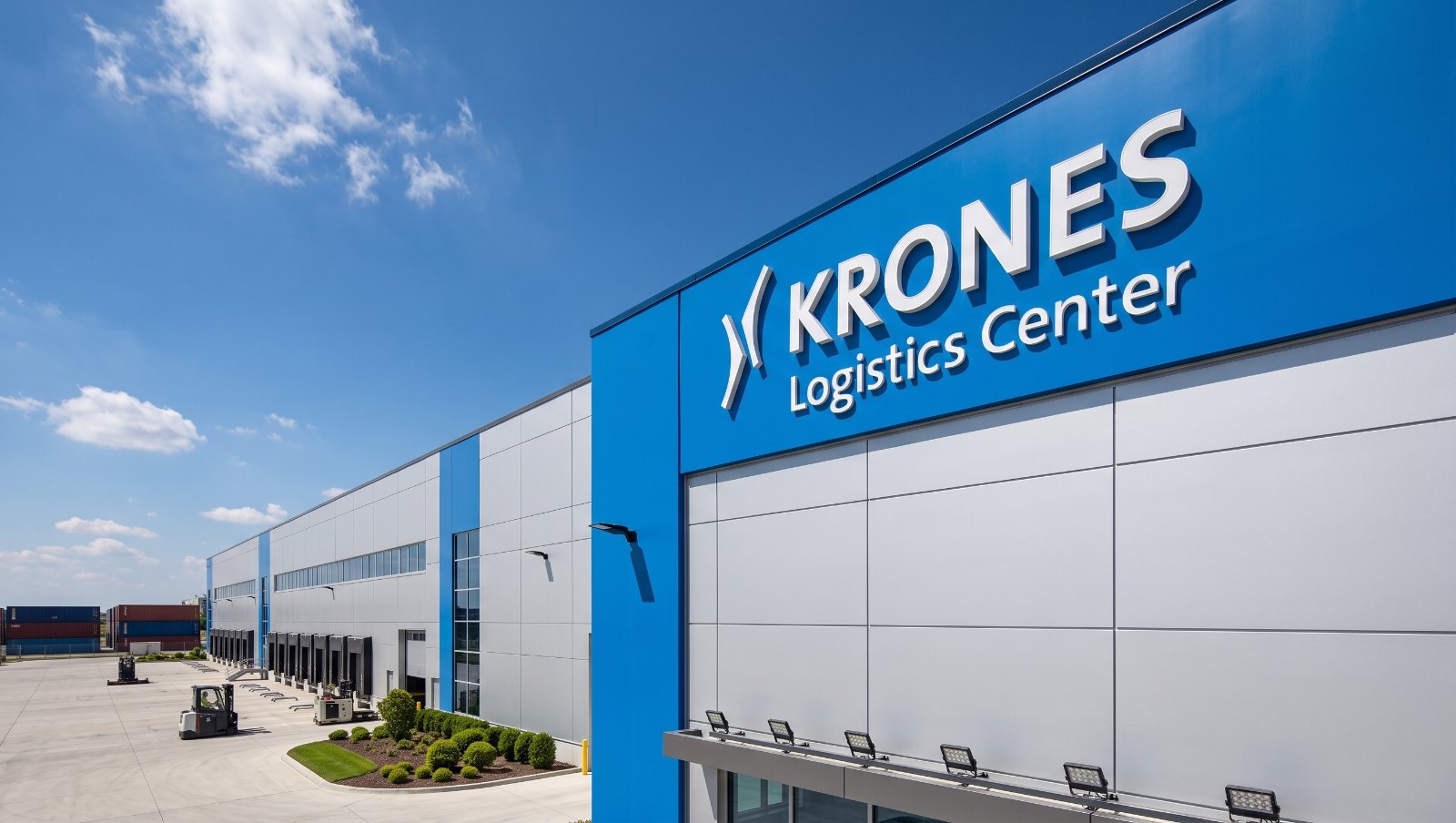
Krones AG, headquartered in Neutraubling near Regensburg, is a systems supplier to the beverage and food industries. Its portfolio ranges from process technology to filling and packaging, as well as intralogistics, plastics recycling, and digital services. The group comprises more than 100 locations worldwide and over 21,000 employees.
In a manufacturing corporation of this size, the employee ID card is not an administrative document but a security tool: It controls access to plants, assembly halls, and R&D areas. Accordingly, responsibility for it lies with corporate security.
The situation: an appointment, a photo shoot, a media transition
"Before, we had a photo and ID office where people had to come in person. Every new employee had to make an appointment. A photo was taken there, and then it was manually entered into our system."
Ari Schuster, Head of Security, Krones AG
This process involves three costs that are rarely considered together:
Coordination. Every admission involves scheduling an appointment, making arrangements, and following up on cancellations.
Mandatory attendance. The photo can only be taken at the designated photo station. Anyone who starts at a different location or goes straight to the orientation on the first day will have to wait for their ID card.
Media discontinuity. Manually transferring data into the ID system is a non-value-added step that must be performed for every single photo.
If there are only a few logins per week, this is manageable. But not if there’s a group-wide password reset.
The catalyst: a swap project involving 20,000 ID cards
"We had a company-wide ID card replacement project ahead of us involving 20,000 ID cards."
ID card replacement projects are deadline-driven projects. All existing ID cards lose their validity on a specified date, and all new ones must be produced and distributed by then. The bottleneck is almost never the card printer or the access control system. It lies in obtaining photos, because this is the only step that requires the participation of each individual.
Krones found out about Photo Collect not through a call for proposals, but through the Peer Group:
"Another company had already dealt with this before—with 50,000 ID cards—and they recommended Photo Collect ."
The solution: Send the photo before the first day of work
Instead of speeding up the existing process, Krones has turned it on its head. Photo capture now takes place at the very beginning of the onboarding process—moving away from the factory gate and toward the individual.
"We use Photo Collect for our employee ID cards to take photos as part of the onboarding process. That way, we have the photo on file before the employee's first day of work and can create the ID card right away."
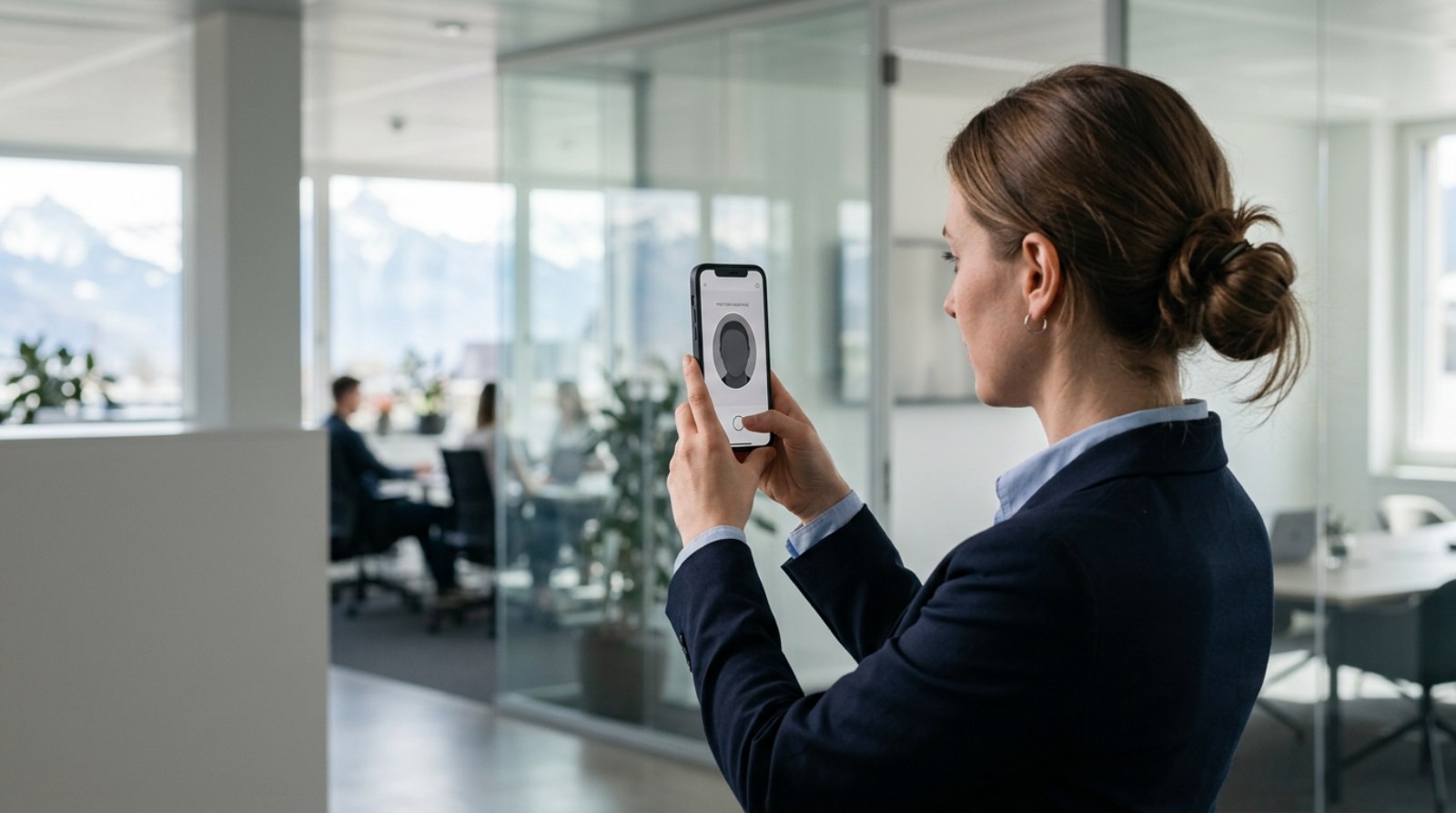
Technically, this is handled through the BYOD channel at Photo Collect: The person entering receives a personalized link and takes a photo of themselves with their own smartphone—no app or login required. The image analysis then checks the sharpness, lighting, head position, and background, automatically crops the image to the required format, and sends the finished image to the target system. The models behind this were developed in-house; they do not use generative techniques and do not alter the face.
For new users without an email address or for latecomers on-site, the photo kiosk remains available as a secondary channel. Data can be transferred to downstream systems via ZIP, sFTP, existing PIAM integration, or the REST API.
The result
"We save a lot of time because we don't have to schedule appointments. Anyone can record it conveniently from home or wherever they are, and it's automatically uploaded to our system."
This means that exactly these three cost categories are eliminated from the initial scenario:
To put this in context, based on data collected across the entire platform from all Photo-Collect customers: The median time from receiving the link to the photo being approved is less than two minutes. During the optional quality control process, on average only 2 to 4 percent of the images are requested again. In total, the platform has processed over four million photos to date.
A German corporation, Swiss manufacturing
Because Krones is subject to European data protection law, the location of processing is a factor in the decision. All photos are processed exclusively in Switzerland at an ISO 27001-certified data center, on a dedicated instance for each customer. For the transfer of data from the EU to Switzerland, the adequacy decision under Art. 45 GDPR is sufficient; additional standard contractual clauses are not required. And no separate consent from employees is required for the use of the photos on the ID card itself.
Three Takeaways for Security and HR Leaders
The ID card is only as fast as the photo. Card production, access permissions, and system maintenance can be planned. Photo acquisition cannot be planned as long as it is tied to an in-person appointment.
An exchange project is a photography project. If you need to replace 20,000 ID cards, you need 20,000 usable photos within a tightly defined time frame. That’s exactly where a schedule-based model no longer scales.
The real benefit lies in everyday life. The exchange project is the catalyst; onboarding is the benefit. At Krones, the digital channel remains the standard route for every new hire even after the project is completed.
Your ID process, your number
Whether it’s 200, 2,000, or 20,000 ID cards: The cost per photo is the figure that really matters. Multiply that by the number of visits per year, and you’ll quickly get a sense of what an appointment-based model actually costs.
Try out the " Capturing " yourself with one of your own photos, or talk to us about your ID card process. We'll use your specific data to show you how Capturing can automate the verification and delivery processes.

More articles