Use cases
30,000 ID photos in a single day: Here’s how IDENTA handles image capture Photo Collect

A full-service provider with a " Photo Collect " approach
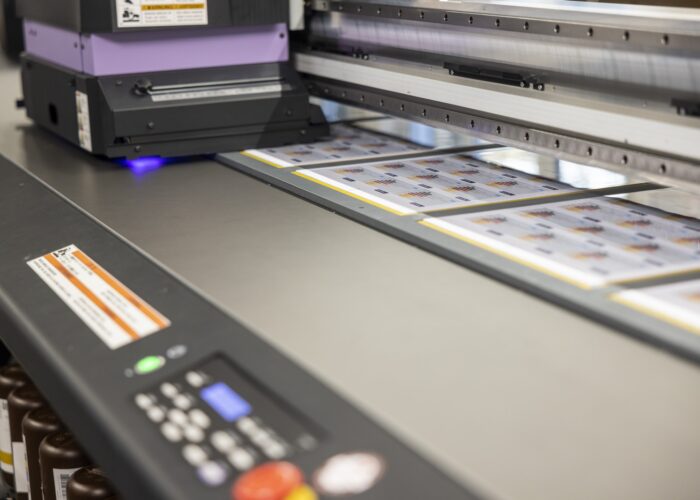
IDENTA, based in Villingen-Schwenningen, offers comprehensive coverage of the entire ID card production chain: RFID cards and key fobs, optical and electronic personalization, security features, card printers, mail-merge services, and its own card management system, IDECardWeb. The quality standards are correspondingly high; the company is certified to ISO 9001, ISO 14001, ISO 27001, and ISO 21434, among others, and has passed the TISAX audit.
As a Senior Key Account Manager, Adrian Rach is responsible for some of the automotive projects and the company’s access control system. He describes a situation familiar to many card manufacturers: Everything in the process is under control, except for the one element that the customer supplies itself.
"Before Photo Collect , we were dealing with a large number of bitmap files, and the quality was poor. And then there were always complaints from end customers because the photo on the card just looked bad."
This is where the key cost factor comes into play. A poor-quality image doesn't come back to haunt the sender—it comes back to haunt the producer. By the time anyone realizes that the template was never usable, the card has already been printed, personalized, and mailed.
The connection: the end customer now only needs to approve
Today, the " Capturing " is done via Photo Collect, and IDENTA retrieves the finished images itself using its own technology.
"You retrieve the images from us via the REST API. In the end, the end customer has nothing to do with the process; they simply approve the images. It's just a clever solution."
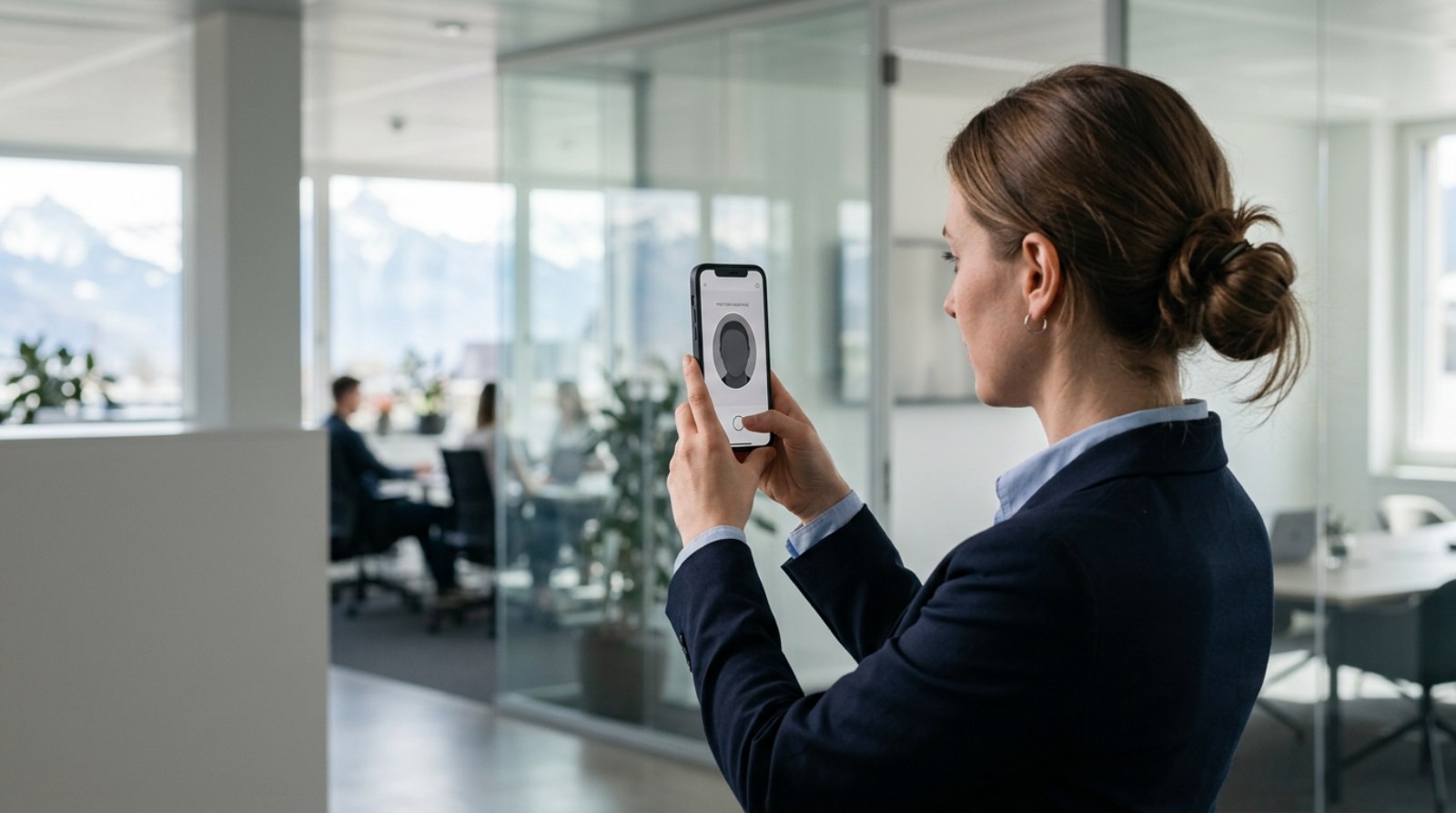
The entire process, from invitation to retrieval, includes: uploading via smartphone, kiosk, app, or QR code; AI validation of focus, lighting, head position, and background; quality control; cropping; and background replacement. What IDENTA receives via the interface is a print-ready image that complies with ICAO and ISO standards —not a folder that someone has to review again.
What matters is where the effort goes. It hasn't disappeared from the partner, but rather from the partner's customer:
"Customers can collect their images much more easily and efficiently. They no longer have to deal with the internal hassle; they can simply hand it over. The end customer benefits enormously."
For IDENTA, this is a key selling point. Card quality, price, and turnaround time are the factors that are compared when putting out a request for proposals for ID card production. The question of who will collect the 4,000 employee photos is rarely addressed in the request for proposals, but this decision influences how the project is perceived internally.
Student IDs: Testing What Is Accepted
Another effect concerns the security of ID card issuance. In all situations where people upload their own photos, the system tests what it will accept. This pattern is familiar in the higher education setting.
"When it came to student ID cards, the photos were often fake. We can now remove those. This way, customers who order the cards can be sure that the cards feature real people—not Mickey Mouse or celebrities."
The validation process identifies comic book characters, familiar faces, group photos, and images of objects before a card is created. For IDENTA, this isn’t just a convenience feature—it’s a guarantee that a delivered ID card will actually function as an ID. An incorrect face is not just a minor flaw in an access control medium.
The Stress Test: Nearly 30,000 Photos
ID card projects rarely occur at regular intervals. They take place as part of a rollout, a card replacement, or the start of the semester. It is precisely at those times that it becomes clear whether an enrollment solution can scale.
"The end customer sent us nearly 30,000 images through you. You processed them and sent them back within 24 hours, so we were able to send the ID card straight to print."
30,000 images, one workday, no intermediate steps. This is what distinguishes a large-scale project that you accept from one that you’d rather turn down based on cost calculations. This is made possible by a combination of an automated preliminary review—which, in practice, yields about five times as many directly usable images as a raw upload—and manual quality control, during which approximately 3,000 photos are reviewed per person per workday.
What consequences this has for other partners
The IDENTA case can be summarized in three points:
Photo Collect It does not replace any process; it fills a gap. IDENTA continues to handle card management, personalization, and printing. The only change is that the step—which was previously unstructured—has been integrated. Data is retrieved via a REST API, or alternatively via sFTP or ZIP, and can be encrypted using OpenPGP upon request.
The end customer recognizes the benefit—not just the partner. The partner gains a selling point but loses a reason for a complaint. The client has the tangible advantage of being able to outsource photo procurement.
Peak loads become predictable. Anyone producing 30,000 ID cards in a single rollout no longer needs additional capacity for image processing.
Card manufacturers, providers of card management systems, integrators of access control and time-and-attendance systems, and suppliers to universities, public transportation agencies, and government agencies are the most directly affected. What they have in common is that they absolutely need the photo, but do not profit from it.
A Note on the Data
Personal images are considered particularly sensitive data. For partners that supply government agencies, public transportation companies, or industrial customers, this is a key consideration in the procurement process. Photo Collect is hosted in a Swiss data center that is ISO 27001-certified. The AI models were developed in-house; no foreign cloud services or generative AI are used.
Become a Partner
If you create ID cards, integrate systems, or manage ID card projects, and if capturing images currently involves work that isn’t compensated: Let’s talk about what an integration might look like in your case. You can see for yourself in under two minutes what the process is like for your customers— capture a test photo.

More articles