
Data Protection at Self-Service Kiosks / Photo Booths: Why Companies Should Be Especially Careful When Taking Employee Photos for ID Cards
Whether it's for employee photos, ID cards, or access control—a quick trip to the photo kiosk or photo booth often eliminates the hassle of arranging for a photographer or manually capturing photos in the HR office.
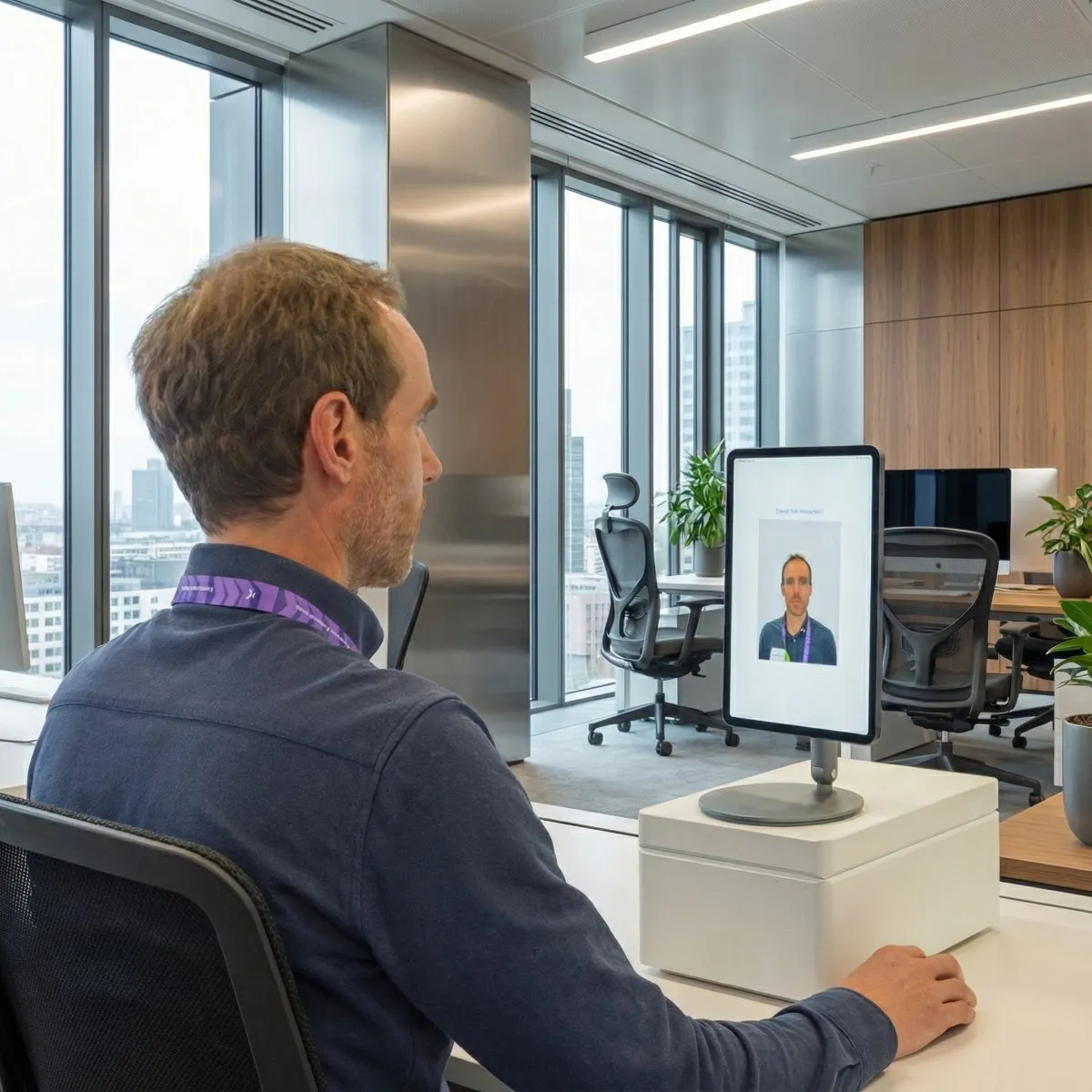
Self-service kiosks and photo booths have become a common sight in many businesses. Whether for employee photos, ID cards or access control—a quick trip to the photo kiosk or photo booth often replaces the tedious task of arranging for a photographer or manually entering photos in the HR office. But the more processes are automated, the louder one question becomes:
What actually happens to the data—and are self-service kiosks really compliant with data protection regulations?
Many companies underestimate the sensitivity of image data. A photo may seem harmless—but in reality, it constitutes biometric data, which is subject to the strictest level of protection under the GDPR and the Swiss Data Protection Act.
In this article, we take a closer look: What are the risks, what do companies need to consider, and how does a solution like Photo Collect ensure that efficiency and data protection go hand in hand?
Why Self-Service Kiosks Pose a Risk Without Data Protection
Self-service photo kiosks are designed to make life easier. But poorly implemented systems can quickly become a problem.
Common Data Privacy Pitfalls in Traditional Kiosk Systems
- Photos are saved on the device and are not deleted immediately
- Connections are unencrypted
- There is no clear user or role management
- It is unclear where the data is processed—or for how long
- Lack of automatic deletion or backups on insecure systems
For companies that issue ID cards or grant access to security-sensitive areas, this is a nightmare. After all, even minor vulnerabilities can lead to major data breaches.
How Photo Collect Ensures Self-Service Kiosks Comply with Data Protection Regulations
Photo Collect was developed specifically to address this challenge: a modern, fully compliant solution for capturing and processing employee photos—whether via smartphone, app, or self-service kiosk.
And yes: Not only is this efficient, but it’s also secure. Very secure.
1. Hosting in Switzerland: Data processing remains within the country
All data is processed in an ISO 27001-certified data center in Switzerland. This means:
- 24/7 monitoring
- Multi-level access controls
- Highest standards for server redundancy
For companies, this means: No outsourcing to third countries, no CLOUD Act risk, no hidden data paths.
2. Pseudonymization instead of real names
One particularly important point: Photo Collect does not require names to process the photos. Each data record is assigned a unique technical ID that is independent of personal information.
This significantly reduces the risk to employees—even if someone were to gain unauthorized access, the data would be practically worthless.
3. Secure photo capture in kiosk mode
The Photo Collect kiosk runs in iOS's "Guided Access" mode. This mode ensures that:
- No other app can be opened
- No data is stored locally on the device
- The iPad can only be used to operate the photo kiosk
For businesses, this means maximum control without technical complexity.
4. Fully encrypted transmission (TLS 1.3)
Whether via a kiosk, app, or web browser: All connections use TLS 1.3, the most advanced standard for encrypted communication. No photo is ever sent over the network unencrypted. Period.
5. Strict role and permission management
While some solutions make all data visible to everyone, Photo Collect follows a clear approach: as little access as possible—only as much as necessary.
Roles such as:
- Quality control
- Procurement
- Export
- Admin
are clearly separated from one another.
This way, every company knows at all times who is authorized to view which data—and who is not.
6. Automatic Deletion & Data Minimization
Once a photo has been successfully exported, it is automatically deleted. Metadata is deleted after 90 days at the latest (or sooner, if desired).
7. AI-powered quality control
Another advantage: Image verification runs automatically in the background:
- Head posture
- Image sharpness
- Lighting
- Background
- Visibility of the face
This eliminates the need to manually review sensitive raw data—a real advantage in terms of data protection and efficiency.
What does this mean for businesses?
In short: Photo Collect combines a seamless user experience with maximum data protection.
Companies benefit from:
- Consistent, professional employee photos
- Faster processes for ID cards
- Fewer manual tasks for HR
- Transparent, auditable data protection
- Reduced risks with sensitive image data
And what about employees? They’ll love the simple, convenient, and flexible photo upload process—no photographer, no waiting, just via a link or right at the kiosk.